

本篇笔记文档名 👇

•27英语-柴荣英一2006年T4阅读精讲课堂笔记✔
本文为2006年考研英语一Text 4的精讲笔记,围绕艺术主题转变展开分析。文章指出,早期艺术侧重表达快乐,而当今艺术多关注悲情主题,通过古今对比与原因剖析,揭示艺术主题转变的必然性。现代社会商业广告充斥虚假快乐信息、大众媒体传播无忧内容,导致人们对快乐产生质疑;过去苦难经历使艺术无需再渲染痛苦。笔记强调,悲情艺术如宗教般起到警醒作用,提醒人们正视痛苦与失落,在接受不完美中感受真实快乐。同时包含题目解析、主题词替换、熟词僻义及背景知识,助力考生理解文章逻辑与考点。
文档的预览图如下,需要完整PDF文件的同学,文末有文档编码,保存后即可直接打印使用。
📑27英语-柴荣英一2006年T4阅读精讲课堂笔记
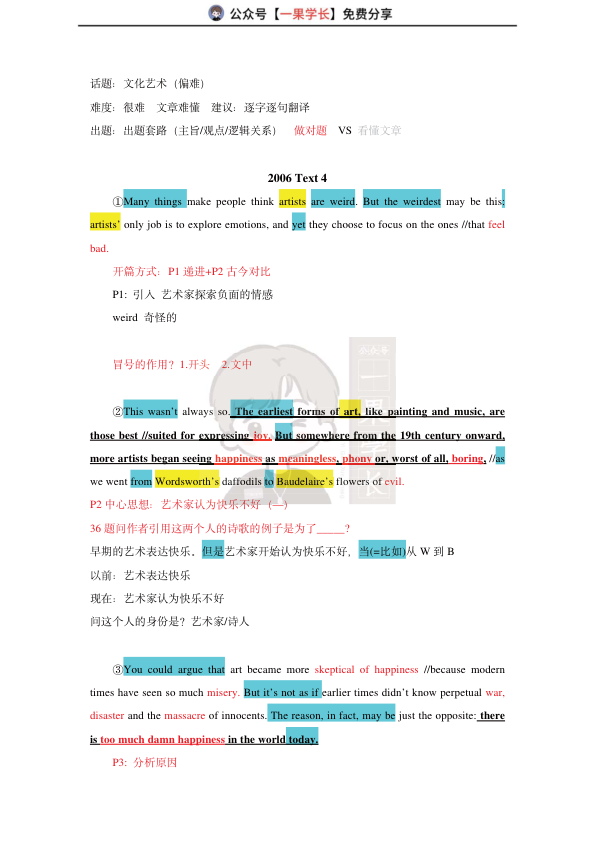
1 Many things make people think artists are weird. But the weirdest may be this: artists’ only job is to explore emotions, and yet they choose to focus on the ones that feel bad.
开篇方式:P1递进+P2古今对比
P1:引入主题:当今艺术关注负面情感
2 This wasn’t always so. The earliest forms of art, like painting and music, are those best suited for expressing joy. But somewhere from the 19th century onward, more artists began seeing happiness as meaningless, phony or, worst of all, boring, as we went from Wordsworth’s daffodils to Baudelaire’s flowers of evil.
P2:艺术主题由快乐向悲情转变
3 You could argue that art became more skeptical of happiness because modern times have seen so much misery. But it’s not as if earlier times didn’t know perpetual war, disaster and the massacre of innocents. The reason, in fact, may be just the opposite: there is too much damn happiness in the world today.
P3:分析原因:现代社会快乐过多
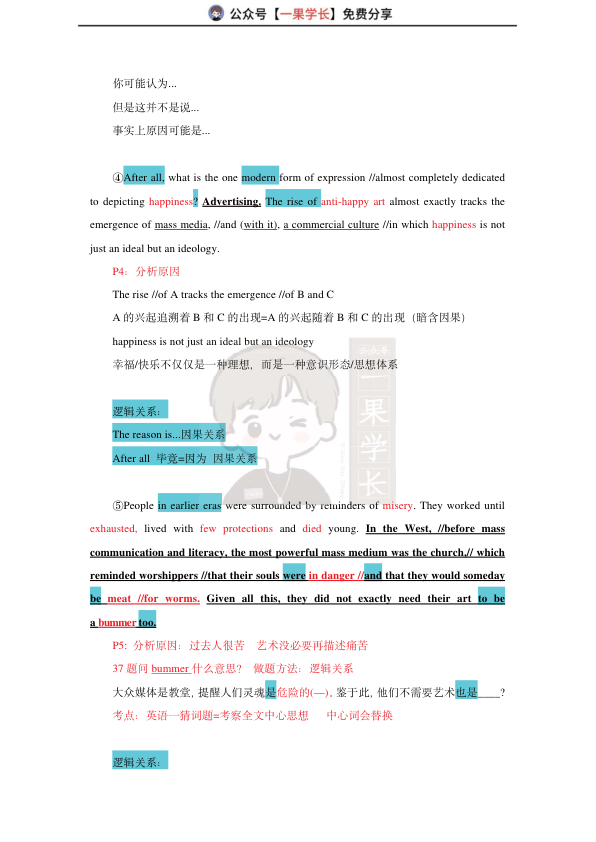
4 After all, what is the one modern form of expression almost completely dedicated to depicting happiness? Advertising. The rise of anti-happy art almost exactly tracks the emergence of mass media, and (with it), a commercial culture in which happiness is not just an ideal but an ideology.
P4:原因:商业广告与反快乐艺术同步兴起
5 People in earlier eras were surrounded by reminders of misery. They worked until exhausted, lived with few protections and died young. In the West, before mass communication and literacy, the most powerful mass medium was the church, which reminded worshippers that their souls were in danger and that they would someday be meat for worms. Given all this, they did not exactly need their art to be a bummer too.
P5:过去苦难多,艺术无需再渲染痛苦
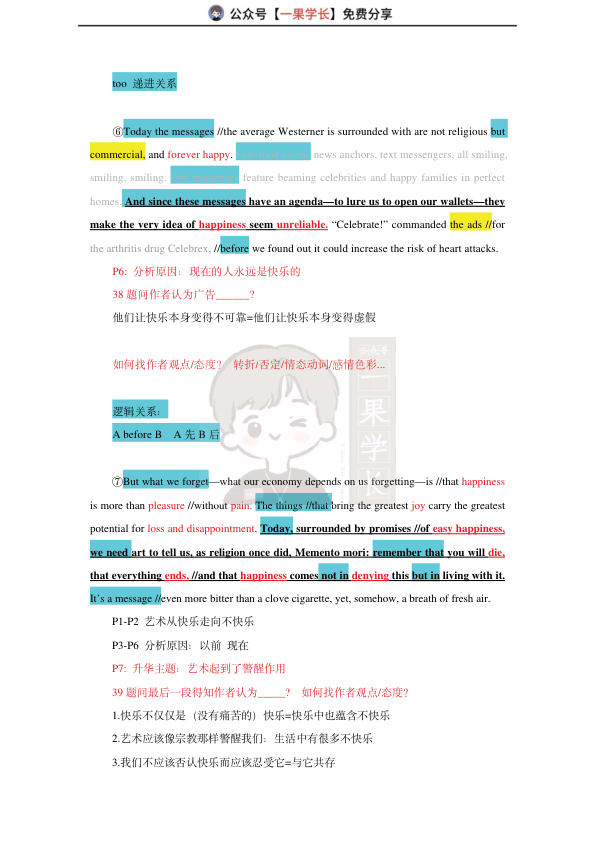
6 Today the messages the average Westerner is surrounded with are not religious but commercial, and forever happy. News anchors, text messengers, all smiling, smiling, smiling. Feature beaming celebrities and happy families in perfect homes. And since these messages have an agenda–to lure us to open our wallets–they make the very idea of happiness seem unreliable.
P6:现代商业信息传递虚假快乐,广告使快乐不可靠
37题问“bummer”什么意思?逻辑关系:too递进关系,大众媒体是教堂,提醒人们灵魂危险,无需艺术也是,考点猜词题
7 But what we forget–what our economy depends on us forgetting–is that happiness is more than pleasure without pain. The things that bring the greatest joy carry the greatest potential for loss and disappointment. Today, surrounded by promises of easy happiness, we need art to tell us, as religion once did, Memento mori: remember that you will die, that everything ends, and that happiness comes not in denying this but in living with it. It’s a message even more bitter than a clove cigarette, yet, somehow, a breath of fresh air.
P7:升华主题:艺术的警醒作用,提醒人们接受痛苦
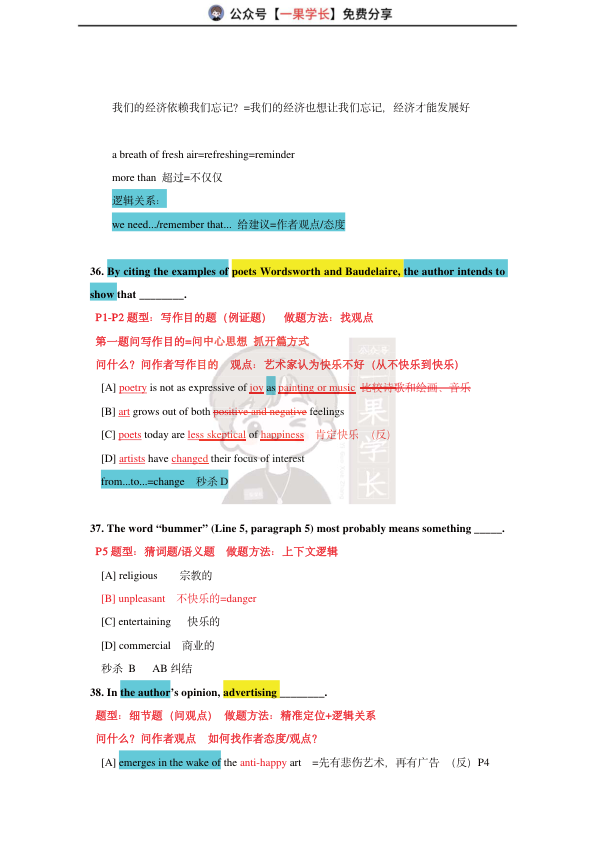
39题问最后一段作者认为?快乐不仅是无痛苦的快乐,艺术应如宗教般警醒,与痛苦共存
36-40题串联:广告相关,考点中心思想,建议逐字翻译,作业总结开篇方式。
1️⃣ 关注果哥公众号【一果学长】

2️⃣ 公众号后台回复“目录”查看